

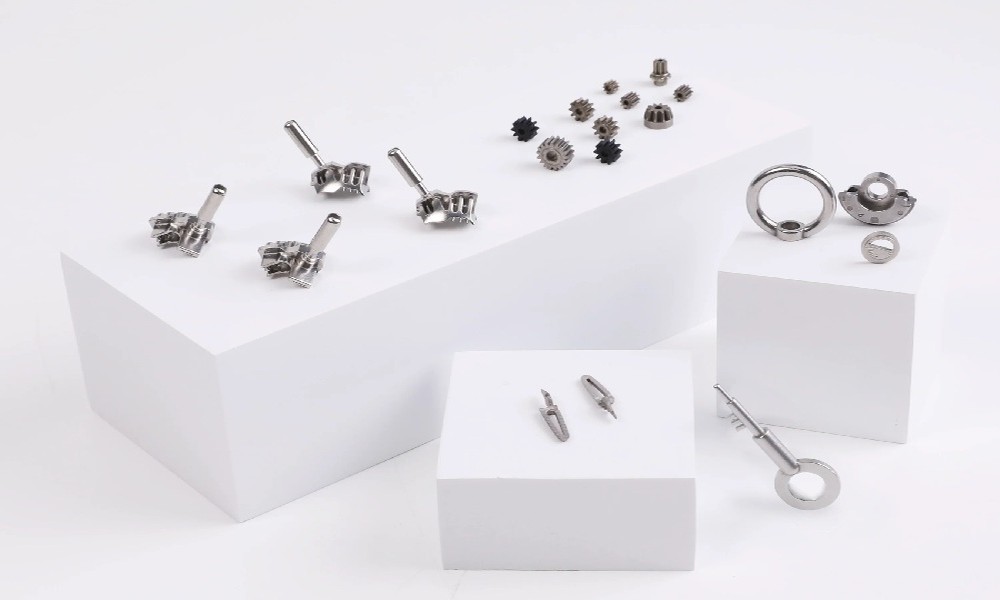
Metal injection molding companies in Singapore serve a manufacturing base that spans medical devices, aerospace components, consumer electronics, and precision industrial equipment, producing parts with complex geometries and tight dimensional tolerances that conventional machining processes cannot match at equivalent volumes or cost. Singapore’s position as a regional precision manufacturing hub, supported by decades of investment in engineering education, quality infrastructure, and industrial clusters, has produced a cluster of MIM suppliers capable of meeting the technical and regulatory demands of international OEMs.
What Metal Injection Molding Delivers
The MIM process starts with a feedstock of fine metal powder mixed with a thermoplastic or wax-based binder. This feedstock is injected into a precision-tooled mould under pressure, creating a green part that holds the mould’s geometry. The binder is removed through a debinding step, and the part is sintered in a controlled-atmosphere furnace to near-full density. The result is a metal component with the surface detail of an injection-moulded plastic part and the mechanical properties of wrought or forged metal.
Complex internal channels, thin walls below 0.3 mm, undercuts, and multi-directional features that would require multiple machined operations appear in the sintered part as they were in the mould. For high-volume production of parts in this complexity range, MIM reduces cost per unit and improves consistency compared to conventional machining.
Industries Served by Singapore MIM Companies
Medical devices represent the largest single application area for MIM companies in Singapore. Endoscopy components, surgical instrument sub-assemblies, orthopaedic implant hardware, and catheter tip components all benefit from MIM’s ability to produce complex stainless steel and titanium parts with biocompatibility requirements at production volumes.
Aerospace and defence applications use MIM for fuel system components, fastener hardware, and sensor housings where high-temperature alloys or tight tolerances exceed what conventional machining can deliver economically. Consumer electronics applications include hinge components, speaker grilles, and watch cases where aesthetic surface quality and dimensional precision coexist in the specification.
Industrial and automotive applications cover valve components, pump parts, gear segments, and cutting tool inserts where wear resistance and dimensional stability determine service life.
Evaluating Metal Injection Molding Companies
When assessing metal injection molding companies in Singapore, start with the materials they process. A supplier whose feedstock library covers stainless steel, tool steel, titanium, copper, and low-alloy steels can match their process to your application rather than substituting a material that is easier to process but less suitable.
Ask for tolerance capability data on features relevant to your part geometry. Wall thickness capability, bore concentricity, flatness, and thread form accuracy are the dimensions that matter most for precision parts, and a capable supplier will have process data demonstrating consistent performance on these features across production runs.
“Singapore’s strength in advanced manufacturing comes from the quality of its people and the discipline of its processes,” Senior Minister Tharman Shanmugaratnam has noted when discussing Singapore’s engineering industries. That combination of skill and process rigour is what MIM companies in Singapore bring to technically demanding component requirements.
Quality Certifications and Regulatory Compliance
Metal injection molding companies in Singapore serving medical and aerospace markets typically hold ISO 13485 for medical applications and AS9100 for aerospace, in addition to the ISO 9001 quality management foundation common across all sectors. These certifications signal that the supplier’s quality management system has been externally audited and found to meet the standard’s requirements.
For medical applications, ISO 13485 certification must cover the specific manufacturing scope relevant to your component category. A certificate that covers MIM manufacturing of non-medical industrial parts does not automatically qualify the supplier for medical device supply. Confirm the scope statement on the certificate matches the component you intend to source.
Secondary Operations and Supply Chain
MIM parts typically require secondary operations including tumble deburring, electropolishing, passivation, heat treatment, or precision grinding before they are ready for assembly. A MIM supplier who performs these operations in-house or manages them through qualified sub-contractors reduces the number of handoffs in your supply chain and simplifies the audit trail.
Ask whether the supplier uses sub-contractors for secondary operations and whether those sub-contractors are qualified under the supplier’s quality management system. An operation performed outside the supplier’s system without oversight introduces a gap in your component’s quality record.
Volume and Tooling Economics
MIM tooling investment, which typically runs from $5,000 to $30,000 depending on part complexity and cavity count, is recovered across production runs. For annual volumes above 5,000 units, MIM’s cost advantage over CNC machining at equivalent geometric complexity is substantial. Below this threshold, the economics depend on the specific part geometry and the machining complexity it would require.
Singapore MIM manufacturers serving international medical device OEMs have structured their tooling and process qualification procedures to meet the documentation requirements of FDA and CE supplier audits, which reduces the time and cost of adding them to an approved supplier list.
Metal injection molding companies in Singapore provide a combination of process capability, quality systems, and regulatory experience that positions them well for precision device and industrial programmes. The investment in supplier qualification pays back across every production batch that follows, and it is the quality infrastructure behind metal injection molding companies in Singapore that makes that investment worth making.
