

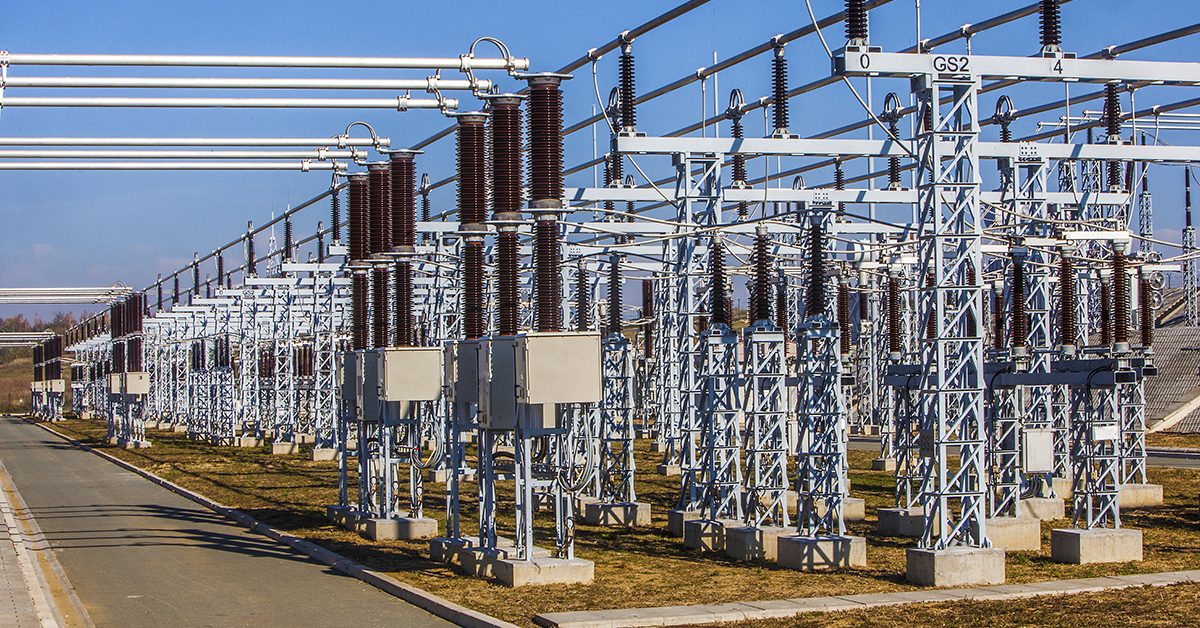
Electric power systems operating at high voltages play a vital role in three main sectors: power generation, manufacturing, and transportation. PD occurs gradually throughout insulation materials until equipment failure happens when detection occurs too late. Detecting PD in its early stage remains crucial because small initial discharges become costly, severe breakdowns that endanger safety. The ultrasonic partial discharge detector operates as an essential protective system, spotting preliminary PD signals before significant complications occur.
You will face difficulties when picking one of many available current ultrasonic PD detectors. The operational capability of a PD detector depends on multiple elements, such as its sensitivity features combined with noise reduction capabilities and real-time detection aspects, as well as forecasting maintenance plans.
Here, we will outline the most critical features that define a superior ultrasonic partial discharge detector so that you can make an informed investment in this essential equipment.
Broad Frequency Range and High Sensitivity
The most fundamental attribute of an ultrasonic PD detector is that it is sensitive to small partial discharge signals. Since PD emits high-frequency sound waves that are usually weak and difficult to distinguish from ambient noise, a sensitive detector will detect every possible discharge event and reduce the probability of a failure in insulation.
Why it Matters
High discharges are very subtle and complex to detect without very sensitive sensors.
A broad range of frequencies (usually 20 kHz – 100 kHz or more) is required to detect many types of PD in various equipment.
Increased sensitivity enables early detection so that maintenance is proactive and not reactive.
What to Look For:
Adjustable sensitivity levels for changing environmental conditions
Broad detection frequency range to capture every PD event
The ability to filter out unwanted noise for more accurate measurements
Advanced Signal Processing and Noise Filtering
Industrial environments typically contain electrical noise, mechanical vibrations, and other interference that can interfere with PD detection. A quality ultrasonic detector must have advanced signal processing algorithms and noise filtering features to differentiate between PD activity and interfering disturbances.
Why It Matters
False positives can lead to maintenance that is not necessary, wasting resources and time.
Industrial noise can overwhelm critical PD signals, so it is not simple to detect defects.
Sophisticated filtering permits only relevant information to be captured, making diagnosis more accurate.
What to Look For:
Digital noise reduction and smart filtering technology
Intelligent algorithms capable of discriminating between PD and electrical or mechanical noise
Adjustable filtering settings for multiple uses
Real-Time Monitoring and Logging of Data
Effective PD detection is more than a matter of noticing a one-time discharge; it is a matter of monitoring and analyzing patterns over some time. Real-time tracking and in-depth data logging allow maintenance teams to make informed decisions that prevent unplanned failures.
Why It Matters:
Continuous monitoring allows teams to detect changes in PD activity and makes it more straightforward to predict when maintenance is needed.
Data logging allows for trend analysis and gives insight into deterioration over time.
Early detection of hazardous levels of PD enables prompt intervention to avert disastrous failures.
What to look for
Integrated memory or cloud storage for long-term data retention.
Timestamped event logs to track PD progression
Instant diagnosis through real-time waveform visualization
Wireless Connectivity and Remote Access
Modern PD detectors now often come with wireless communication capabilities that enable maintenance teams to check on equipment from a distance. This is particularly useful when equipment is in hazardous or remote areas.
Why It Matters:
Wireless technology allows engineers to read PD data at a safe distance from possible exposure to high voltage.
Remote access simplifies inspections and diagnostics by making it possible to carry out these activities without being on-site.
Mobile phones can be notified in real-time so that response is faster.
What to Look for
Bluetooth, Wi-Fi, or cellular communication for remote data transfer
Compatibility with Cloud Monitoring Platforms
Mobile app integration for real-time status updates.
Portability and Ergonomic Design
Maintenance workers often perform PD inspections under challenging conditions, and they require a portable and ergonomically designed detector that is easy to use over extended periods.
Why It Matters:
Heavy and bulky detectors are cumbersome to maneuver in tight spaces or on elevated working surfaces.
A simple-to-use interface reduces the learning curve so that technicians can focus on data collection, not device operation.
Durable materials support longevity, even under demanding industrial conditions.
What to look for
Portable, lightweight, and pocket-sized design
Intuitive touch screen or easy-to-use button controls
Durable construction with shock-absorbing housing
Multi-Detection Cap
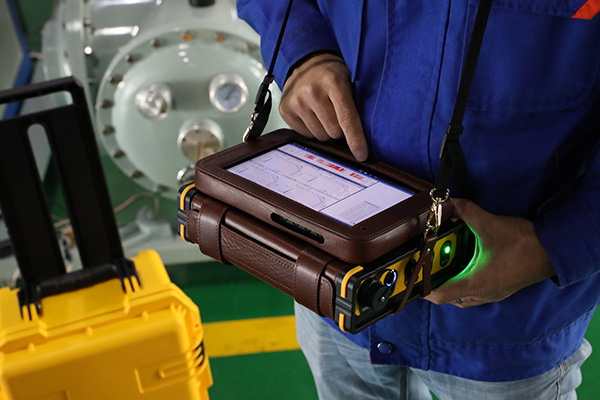
A universal ultrasonic PD detector should be able to detect a wide range of types of partial discharges, including:
Corona discharge is air ionization near conductors at high voltage.
Surface discharge is a current leakage through the surface of insulation.
Internal discharge – Electrical breakdown in insulation materials
Why it Matters
Different types of PD signify varying levels of equipment degradation and require particular detection methods.
A multi-detection system ensures complete monitoring of various electrical assets.
What to Look For
Ability to identify multiple types of PD.
Adjustable detection settings for various conditions
Compatibility with various testing methodologies
Visual and Sound Cues
A proper ultrasonic PD detector must have a variety of visual and audible feedback mechanisms in place so that technicians can detect defects in real time.
Why It Matters:
Audible signals are employed for PD detection under low-visibility conditions as well.
Visual indicators provide instant feedback on the discharge level that has been found.
What to Look For
Adjustable thresholds for different levels of PD LCD with graphical real-time representation Live audio analysis via headphone or speaker output
Integration with Predictive Maintenance Systems
Various industries modernize their maintenance approaches through predictive methods that analyze ongoing sensor information to predict system breakdowns before they develop. A PD detector that connects to SCADA (Supervisory Control and Data Acquisition) or CMMS (Computerized Maintenance Management Systems) brings improved system reliability.
Why It Matters:
The system produces automatic notifications that enable preventive maintenance, thus eliminating equipment standstills.
The system can make decisions through analytics platform integration.
What to Look For:
Compatibility with industrial monitoring software
APIs or data export options for analytics platforms
The device offers settings to trigger automatic alerts whenever PD thresholds reach dangerous levels.
Selecting an appropriate ultrasonic partial discharge detector becomes vital because it protects high-voltage equipment while lowering operational expenses and stopping equipment breakdowns. Businesses can improve maintenance performance and expand critical asset longevity by selecting features, including advanced sensitivity and noise filtering, real-time monitoring and mobile deployment capabilities, and predictive maintenance enhancements.
